Leak Under Your Kitchen Sink in Maricopa? Here’s What to Do
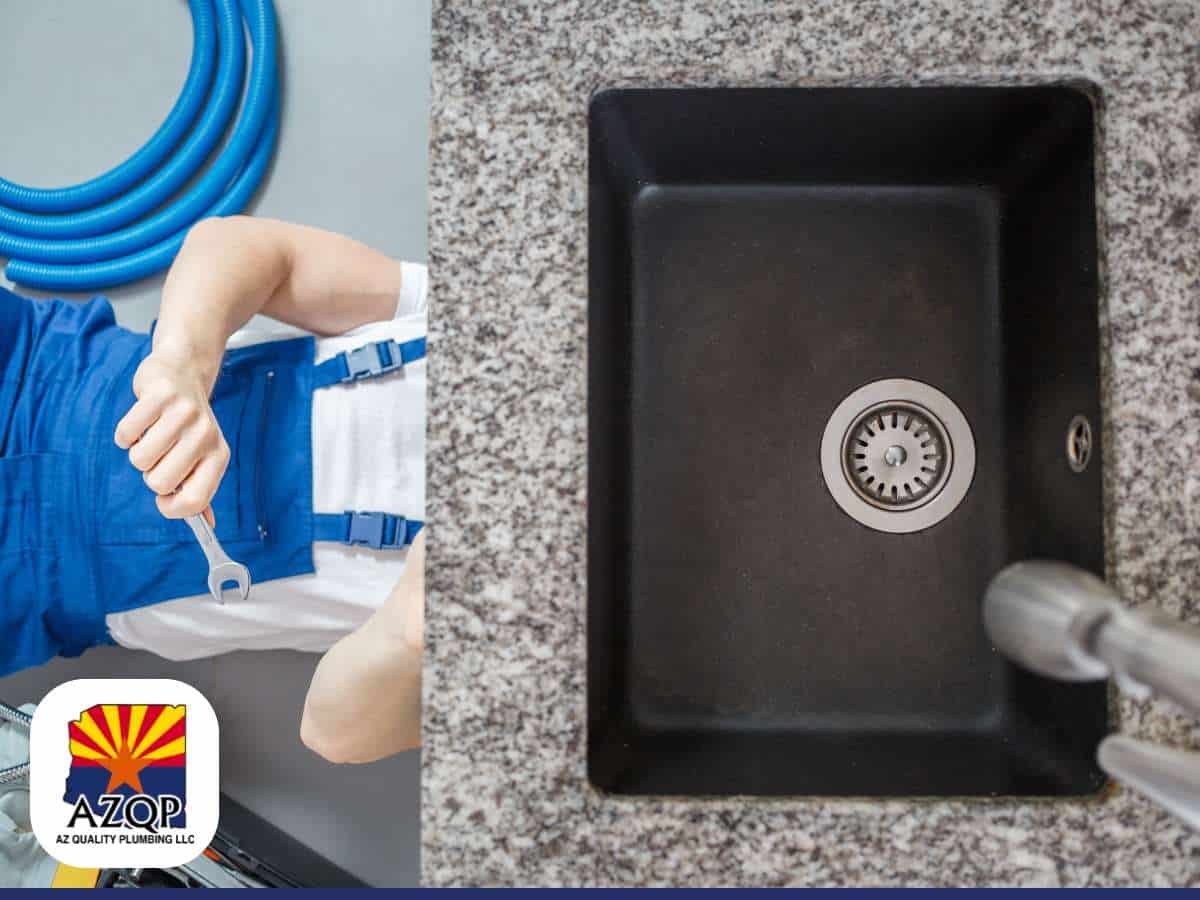
A leak under the kitchen sink always shows up at the wrong time. You’re reaching for a sponge, you pull out the trash, and there it is. The cabinet floor is swollen, something smells off, and you’re not sure how bad the damage actually is.
Most of the time, it’s not as bad as it looks. A homeowner with basic tools can handle the common stuff in under an hour. But Maricopa has its own complications. The water out here is brutal on plumbing fittings, and a lot of houses around town are now hitting the age where original parts start failing in batches.
Why This Happens More Around Here
There are two factors working against your plumbing. First, our tap water is genuinely hard. Depending on your neighborhood, you are likely looking at 18 to 25 grains per gallon. This mineral content acts like sandpaper on metal fittings. Shut-off valves, supply line connections, and faucet cartridges that might last 20 years in other states often fail after 8 years here.
Second, the age of our housing stock is a factor. Most homes in Maricopa and Casa Grande were built during the 2003 to 2008 boom. These houses are now 18 to 23 years old. This is the exact window when original braided supply lines, garbage disposals, and plastic washers reach the end of their lifespan. If you are still using the same parts that came with the house when it was built, you are living on borrowed time.
5 Common Causes of Under-Sink Leaks
Most under-sink leaks come down to one of these five culprits.
- Slip-Joint Washers: The curved P-trap pipe under your sink has rubber or plastic washers at every joint. Over a decade, these washers flatten out and lose their seal. This is the easiest fix on the list.
- Corroded Shut-off Valves: Hard water creates a mineral crust on the valve stem. Because Arizona air is so dry, slow drips often evaporate before they hit the cabinet floor. You might only see a faint white powder or green corrosion on the valve body itself.
- Braided Supply Hoses: These flexible lines connect your valves to your faucet. They are usually rated for 5 to 8 years. When they fail, the inner rubber tubing typically bursts, which can cause significant flooding in minutes.
- Garbage Disposal Failure: Many standard disposals have a galvanized steel grind chamber. Over time, the hard water eats through the bottom seam. If you see water dripping from the very bottom of the disposal unit, the internal seal has failed.
- Faucet Caulk Failure: If the pipes are dry but the cabinet floor is wet, check the seal where the faucet meets the countertop. If the caulk is cracked, water from washing dishes will track down the back of the sink and pool in the cabinet.
Troubleshooting: How to Find the Source of the Drip
Leaks do not always drip directly below the source. Water travels along pipes and tracks down cabinet walls before pooling. To find the source, empty the cabinet completely and wipe everything dry. Lay paper towels under the trap, under each shut-off valve, and along the back wall. Paper towels show moisture that your eyes might miss.
Run the cold water for 30 seconds, then the hot. Watch the towels. Next, plug the drain and fill the basin halfway. Pull the stopper and watch the drain lines. If the towels stay dry during these tests but the floor is wet later, run the dishwasher through a full cycle.
- Wet while water is running: The issue is on the supply side, such as a valve, hose, or the faucet itself.
- Wet only when draining the sink: The issue is on the drain side, likely the P-trap or the drain flange.
- Wet when nothing is running: This indicates a pressurized line is leaking or you have a slab leak. This requires immediate professional attention.
DIY Repair Guide for Basic Plumbing Issues
Before you start any repair, shut both valves and open the faucet to bleed off pressure. Keep a bucket and old towels nearby to catch the “standing water” inside the pipes.
Fixing the P-Trap Place: a bucket under the trap and loosen the slip nuts by hand. If they are stuck, use channel-lock pliers but be gentle. Pull the trap down and inspect the washers. If they are flat, hard, or cracked, replace them. Clean the pipe threads with a damp cloth before reassembling. Tighten the nuts hand-tight plus a quarter turn with pliers. Do not over-tighten plastic threads or you will crack the fitting.
Replacing Supply Hoses: Do not try to patch a leaking hose. Shut the valve and disconnect both ends with an adjustable wrench. Take the old hose to the hardware store to ensure you match the length and fitting size. Most kitchen setups use a 3/8 inch connection at the valve and a 1/2 inch connection at the faucet. Buy a high-quality braided stainless steel hose for better durability against hard water.
Repairing a Drain Flange: This requires a basin wrench and plumber’s putty. From under the sink, remove the big locknut holding the strainer assembly. Push the strainer up and out from the top. Scrape away all old putty with a plastic putty knife to avoid scratching the sink finish. Roll fresh putty into a rope, press it around the underside of the flange, and reassemble.
The Role of High Water Pressure in Maricopa
One thing many generic plumbing guides miss is the role of water pressure. Maricopa often experiences pressure spikes, especially during monsoon season or when the city is adjusting the municipal supply. A standard home should have a water pressure between 50 and 70 psi.
If the pressure regulator on your main line is failing, your home might be sitting at 90 or 100 psi. High pressure puts constant stress on the weak points under your sink. If you fix one leak and another starts a week later, your pressure regulator is likely the culprit. You can buy a simple pressure gauge at a hardware store for under 20 dollars to check this yourself.
Maricopa Specific Problems: Condensation and Slab Leaks
In the peak of the Arizona summer, you might find water that has nothing to do with plumbing. Cold lines from your air handler sometimes run through the wall behind the kitchen. When it is 110 degrees outside, these cold lines sweat. This condensation tracks down the inside of the wall and pools on your cabinet floor. If your cabinet is wet every afternoon but bone-dry every morning, you are likely dealing with condensation rather than a pipe leak.
Slab leaks are a more serious concern for local residents. Most Maricopa homes sit on post-tension slabs with copper lines running underneath the concrete. When these lines develop a pinhole leak, water often surfaces at the closest opening, which is usually the kitchen cabinet or a bathroom vanity.
Signs of a slab leak include:
- A sudden, unexplained spike in your water bill.
- The sound of running water behind walls or under floors when everything is off.
- A warm spot on the kitchen floor tiles.
- Moisture wicking up into the baseboards near the sink.
When to Call a Professional Plumber
Some repairs are too risky for a DIY weekend. If your shut-off valves are frozen with corrosion, do not force them. Breaking a valve can cause an immediate flood. You should also call for help if you smell sewer gas, see dark mold staining on the wood, or if the leak persists after you have replaced the basic parts.
AZ Quality Plumbing provides same-day service to homeowners in Maricopa, Phoenix, and the surrounding East Valley. If you are dealing with a stubborn leak or a suspected slab leak, we can help.
Call us today at (480) 415-3507